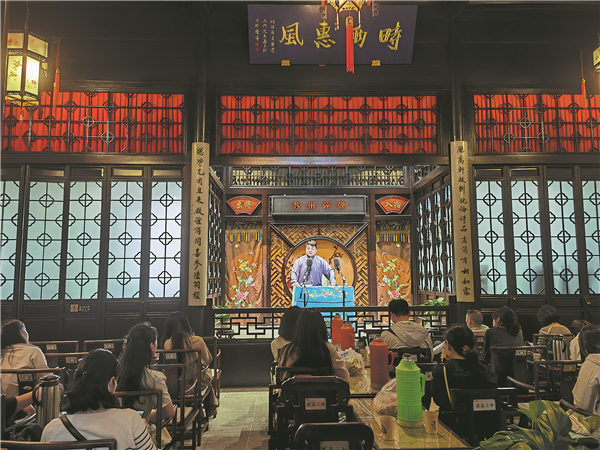
Suzhou Pingtan
Introduction
Suzhou Pingtan is a traditional Chinese art form that combines storytelling and ballad singing in the Suzhou dialect. It has its origins in Suzhou in East China's Jiangsu province, a city renowned for its rich cultural heritage and artistic traditions.
Pingtan performances typically involve a solo performer or a duet, who narrate stories and sing, accompanied by traditional Chinese instruments. This unique art form not only serves as a medium for entertainment but also as a cultural vessel preserving the linguistic and musical heritage of Suzhou.
History
Tracing its roots back several centuries, Suzhou Pingtan emerged as a popular form of entertainment among the people of Suzhou and the surrounding Jiangnan region. Throughout its evolution, Suzhou Pingtan has maintained its appeal by adapting to changing cultural landscapes while preserving its traditional roots.
Characteristics
Suzhou Pingtan is characterized by its engaging narrative style and melodious musical elements. Performers use easy-to-understand language, clear pronunciation, and employ a beautiful, prolonged sound to captivate their audiences. The storytelling aspect of Pingtan involves intricate plots often drawn from historical events, classical literature and folklore, providing both entertainment and education.
Musical Elements
The musical elements of Suzhou Pingtan play a crucial role in its performance. The melodies are typically gentle and flowing, complementing the narrative and enhancing the emotional depth of the stories.
In Suzhou Pingtan, a range of traditional Chinese instruments are used to enhance the storytelling experience. The sanxian, with its distinct tone and versatility, is a staple in Pingtan performances. The pipa, known for its expressive capabilities, provides a melodic accompaniment that enriches the narrative. Cymbals are utilized to punctuate dramatic moments, adding a percussive element to the performance. Additionally, other instruments such as the erhu (a two-stringed bowed instrument) may also be incorporated to create a fuller sound.
Narrative Style
The narrative style of Suzhou Pingtan is marked by its ability to weave complex stories into engaging performances. Storytellers employ a variety of techniques, including dialogue, monologue and descriptive passages, to bring characters and settings to life. The use of the Suzhou dialect adds authenticity and cultural resonance, allowing audiences to connect deeply with the tales being told. The narratives often explore themes of love, morality and human experience, reflecting the cultural values and social norms of the time.
Preservation Efforts
The preservation of Suzhou Pingtan is a priority for cultural institutions and local communities, who recognize its value as a cultural treasure. Various initiatives have been undertaken to safeguard the art form, including educational programs, performances, and the establishment of museums dedicated to Pingtan. These efforts aim to raise awareness, encourage participation, and inspire future generations to continue the legacy of Suzhou Pingtan. Through these endeavors, Suzhou Pingtan remains a vibrant and cherished aspect of China's cultural heritage.








